Learning a new language is most effective when children can touch, see, and interact with the world around them. This week in our Standard class, our young learners took on an exciting new challenge: mastering how to ask and answer questions about nearby and far-away objects!
Our key sentence patterns for the lesson were:
- “What is it?” / “What’s this?” / “What’s that in English?”
- “It’s a…” / “It’s an…”

Classroom Reading & Writing Practice
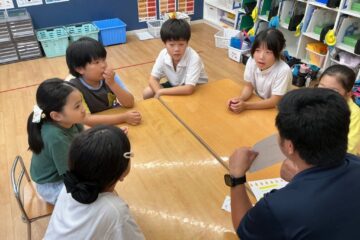
We kicked off our lesson with interactive board work and reading practice! The students worked together to fill in missing letters on the whiteboard, practicing complete question structures like:
What is it?
What color is it?
What’s this in English?
Using workbooks and writing exercises, the children practiced spelling out these questions step-by-step. Seeing the written words while saying them aloud helps solidify sentence structure, spelling, and grammar in a natural, supportive environment.

Interactive Games & Real-Life Objects
Once we mastered the board work, it was time to put our English into motion!
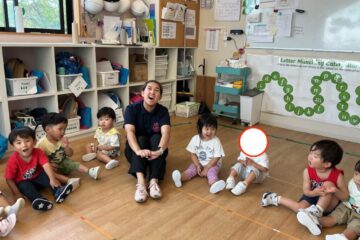
To teach the difference between “this” (something close to you) and “that” (something further away or held by someone else), our teacher used hands-on props like colorful hula hoops, stackable cones, and classroom items.
When a student held a hoop, the teacher pointed and asked: “What’s that in English?”
The student held it up proudly and answered: “It’s a hula hoop!”
When pointing to smaller items close by, students asked each other: “What’s this?” and responded with “It’s a…” or “It’s an…” depending on the object.
By combining physical movement with speaking practice, the learners stay engaged, build confidence, and learn that English is a tool for real-world communication!